Project 03Material handling
Modular heavy-duty storage rack
A replacement rack for equipment that had outgrown its shelving, built as repeated laser-cut and folded modules so it could be produced in quantity.
- Envelope
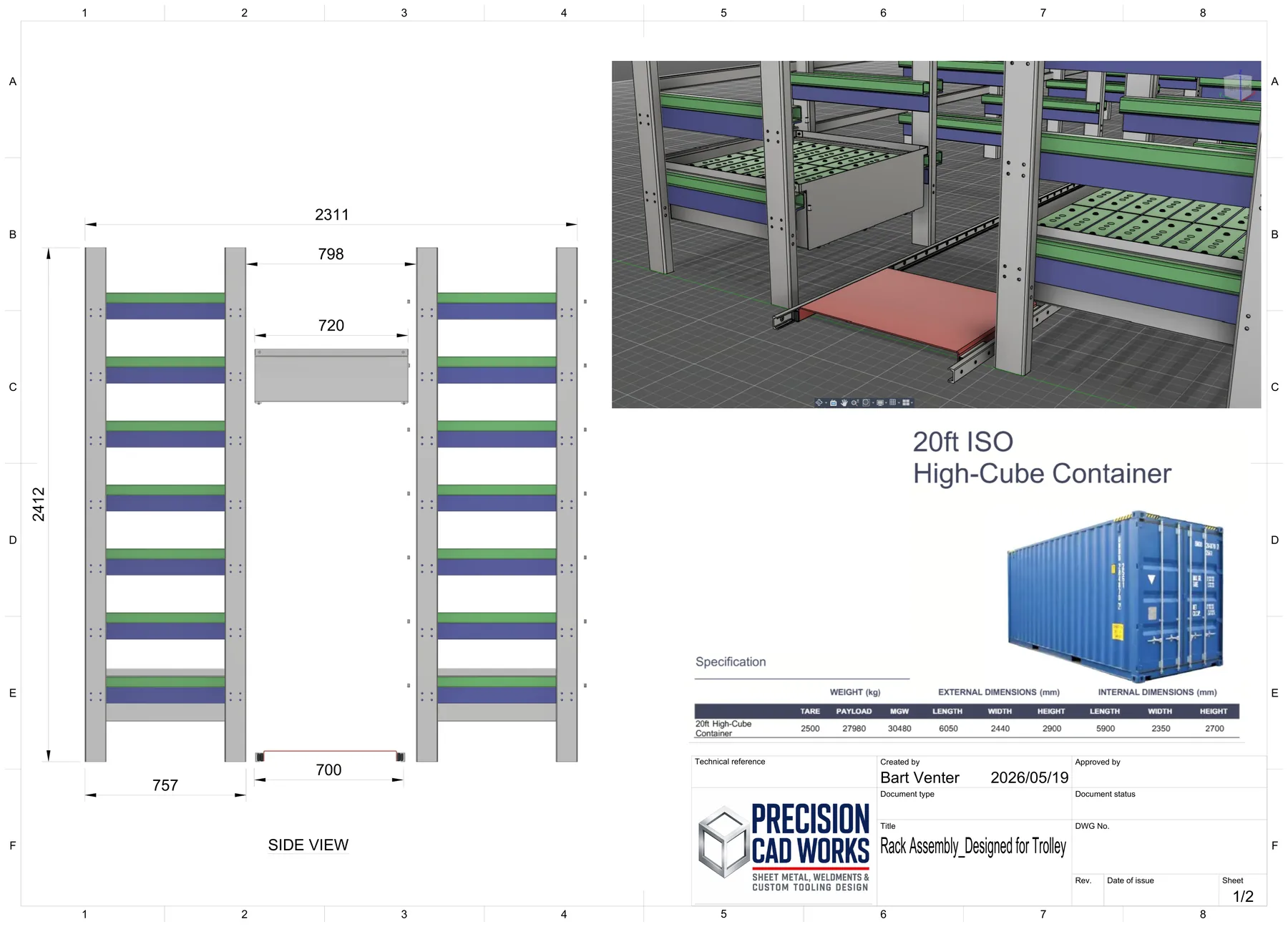
- 2 311 × 2 412 mm
- Length
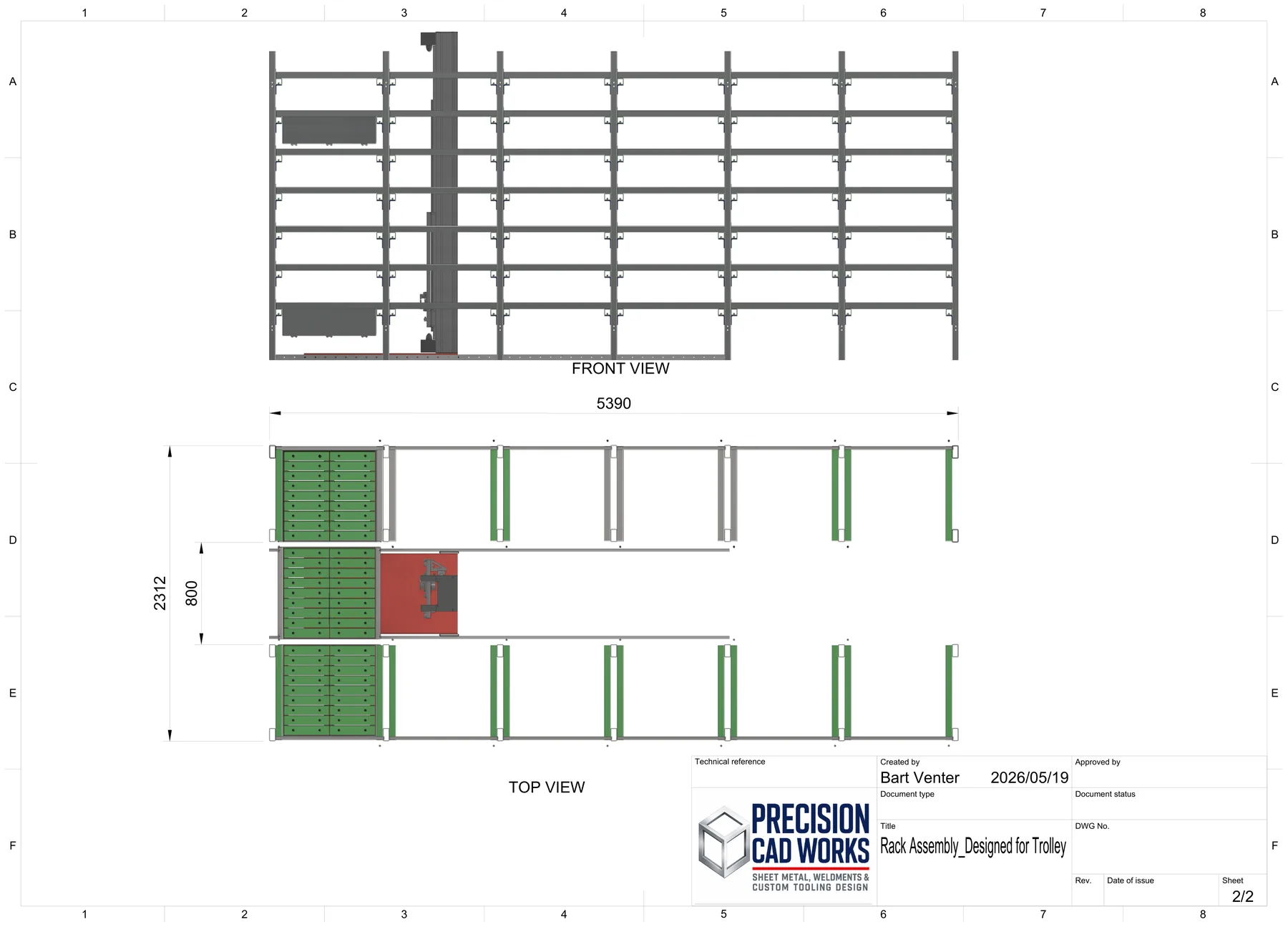
- 5 390 mm
- Central opening
- 798 mm
- Drawer
- 720 mm, ball-bearing
A replacement for a rack that had reached its load limit. Newer equipment weighed more than the structure was designed for, and the client wanted to build the replacement in quantity, so it had to get cheaper per unit rather than more expensive.
The problem
Raising capacity usually means heavier sections, which are slower to build and dearer to ship. This one had to carry more and still be economic in a batch. There was a second problem inside the machine: whatever sits in the middle of a deep rack has to be reached by a person, not a forklift.
What I designed
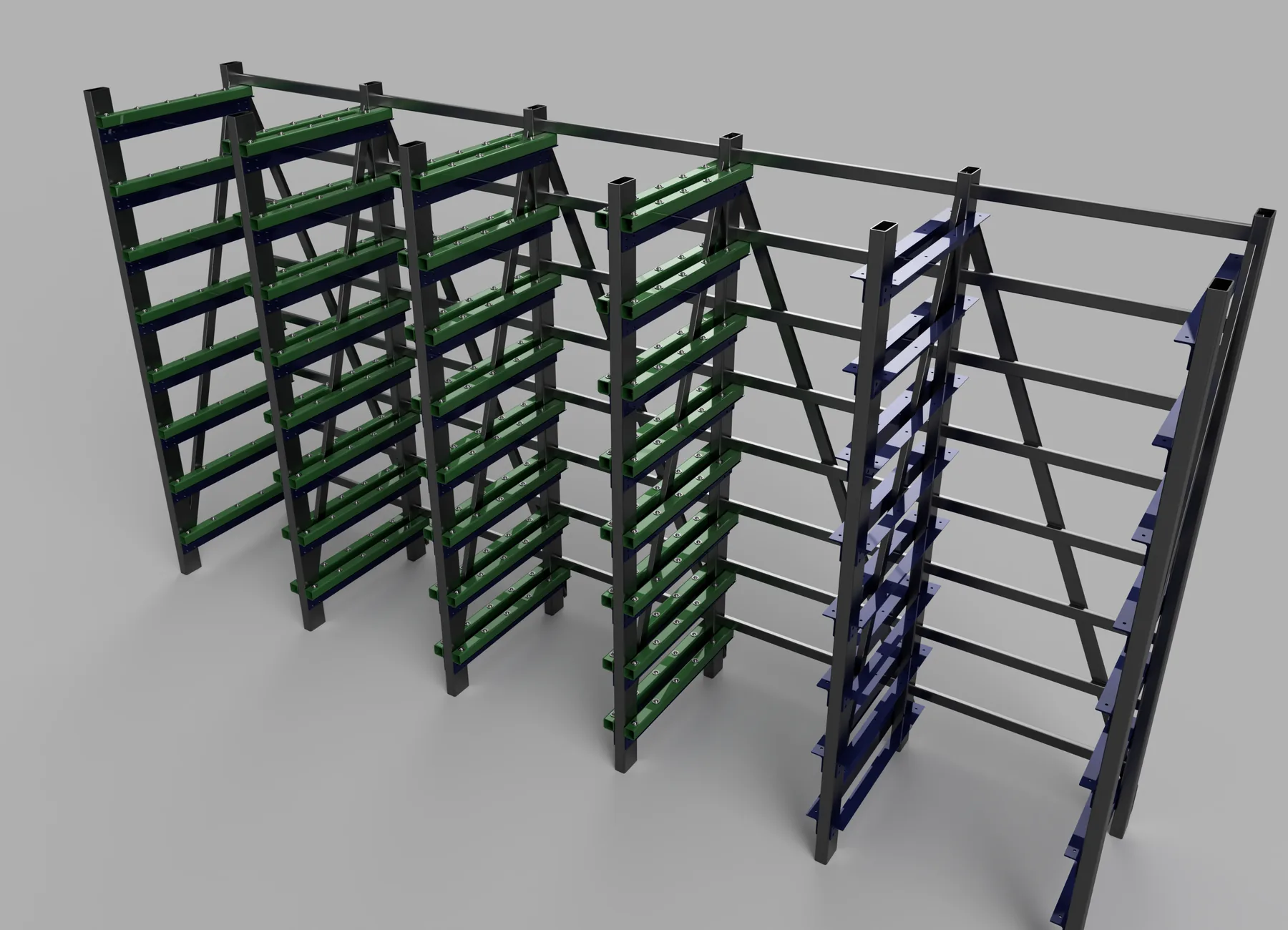
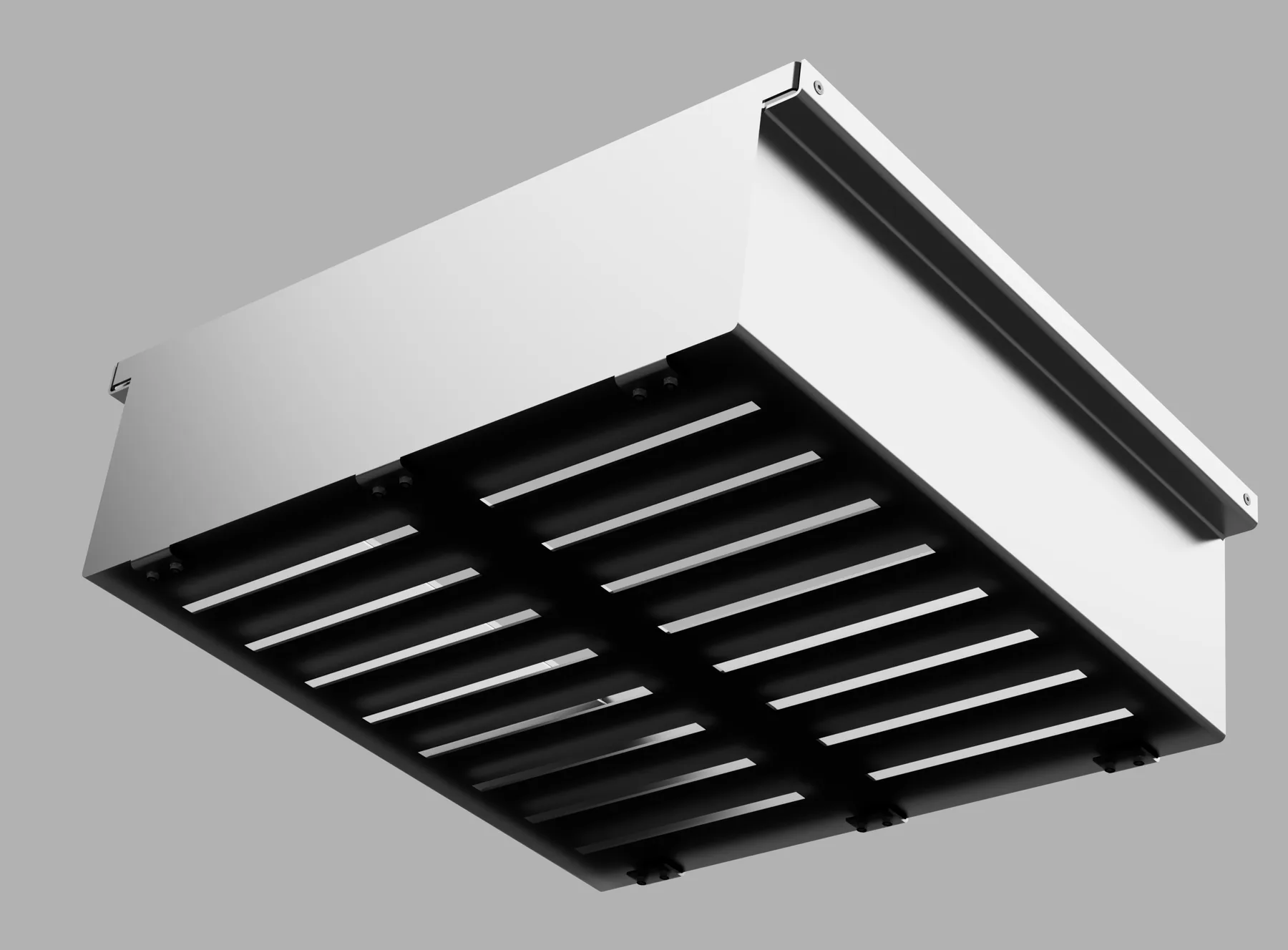
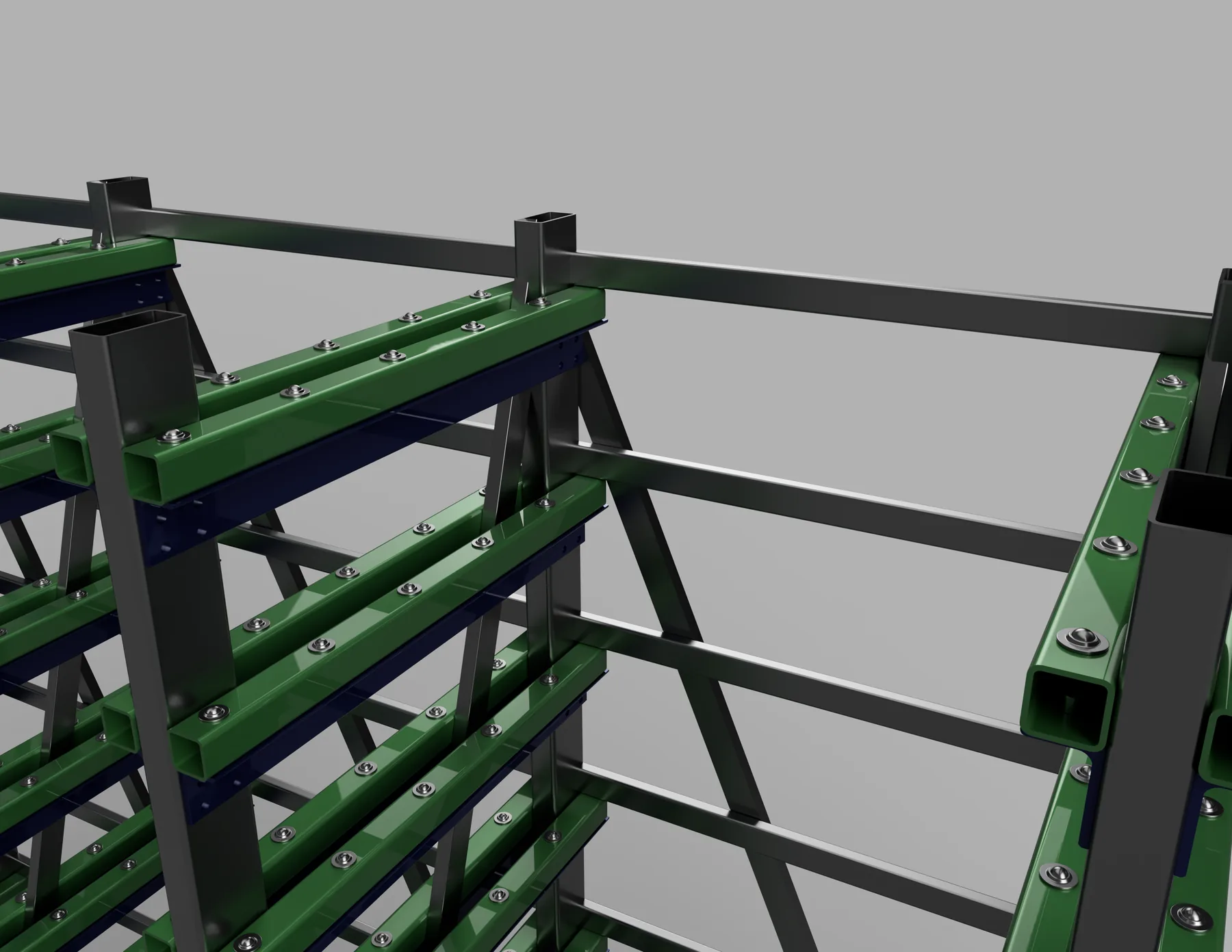
The frame is broken into repeated bays rather than one welded structure, so one drawing set covers a run of any length and parts are cut in batches. Uprights are perforated, so shelf levels are set by hole position instead of welded in place, and folded sheet-metal members replace hot-rolled section where the load path allows. A 720 mm drawer on ball-bearing slides brings the middle of the rack out to the operator, with a 700 mm trolley at floor level.
Details that mattered
Load path
Adjustable racking concentrates load at the beam-to-upright connection and around each perforation. Those are the two places a perforated design gets checked.
The standard that would govern it
Adjustable steel racking is a coded structure: EN 15512, with the FEM 10.2.02 route alongside, governs uprights, beams, bracing and joints. No verification to those standards is claimed here; a production unit would need it, by calculation or test.
Container envelope
2 311 mm wide and 2 412 mm high, checked against a 20 ft high-cube interior of 5 900 × 2 350 × 2 700 mm. A rack that cannot be shipped as designed gets modified badly on site.
Processes
Laser cutting, bending, steel sections and standard bearings — a general sheet-metal shop needs no tooling investment to produce a batch.
What it gives the client
The design replaces a rack that was at its load limit with a modular system that can be produced in multiples from flat parts and adjusted on site. Work of this kind suits racking and storage manufacturers, and fabricators producing repetitive folded products.
Load ratings would be established by calculation or testing of the specific section and connection. None is stated here because none was supplied.
Drawings
Two sheets and four renders: the side elevation with the trolley and drawer, then the front and plan views that set the module repetition over the full length.