Project 01Paediatric mobility
Height-adjustable mobility chair
A mobility chair for a toddler who cannot move his legs, with 200 mm of powered height adjustment and a seat built around a custom cushion.
- Lift travel
- 200 mm
- Overall width
- 570 mm
- Actuator
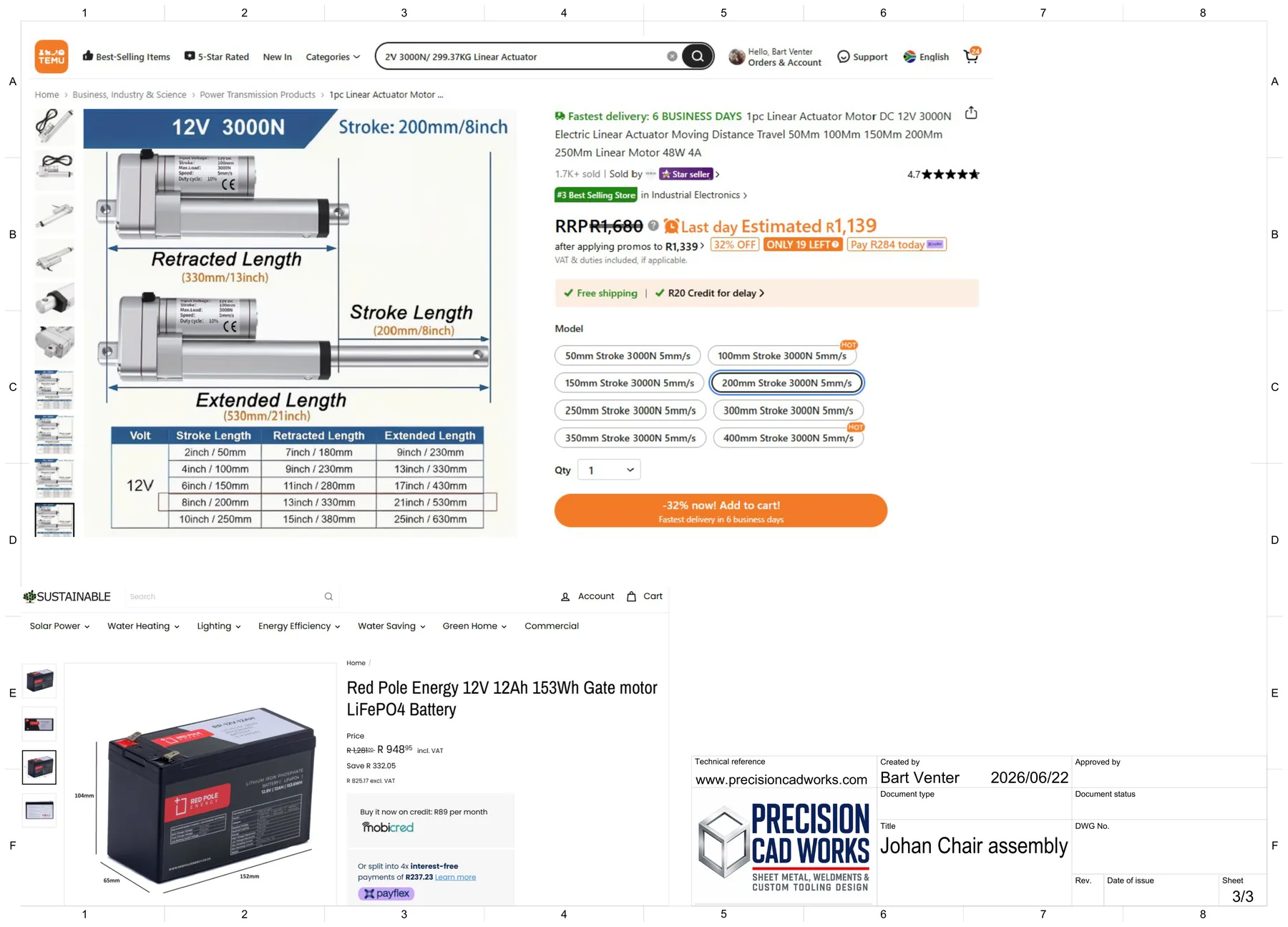
- 12 V · 3 000 N
- Rear wheels
- 260 mm pneumatic
The client needed a chair for a toddler who cannot move his legs. An ordinary wheelchair was awkward to get through the kindergarten, and it left him below the height of the children around him. The seat rises through 200 mm, so it sits at table height or lifts to meet his classmates. The seat takes a custom cushion made to support his spine.
The problem
Two things shaped it. The chair has to fit through a kindergarten door, which rules out a wide stance and pushes the mechanism into the middle of the frame. And he is still growing, so the seat is built around a cushion that supports his spine rather than adapted to one afterwards.
What I designed
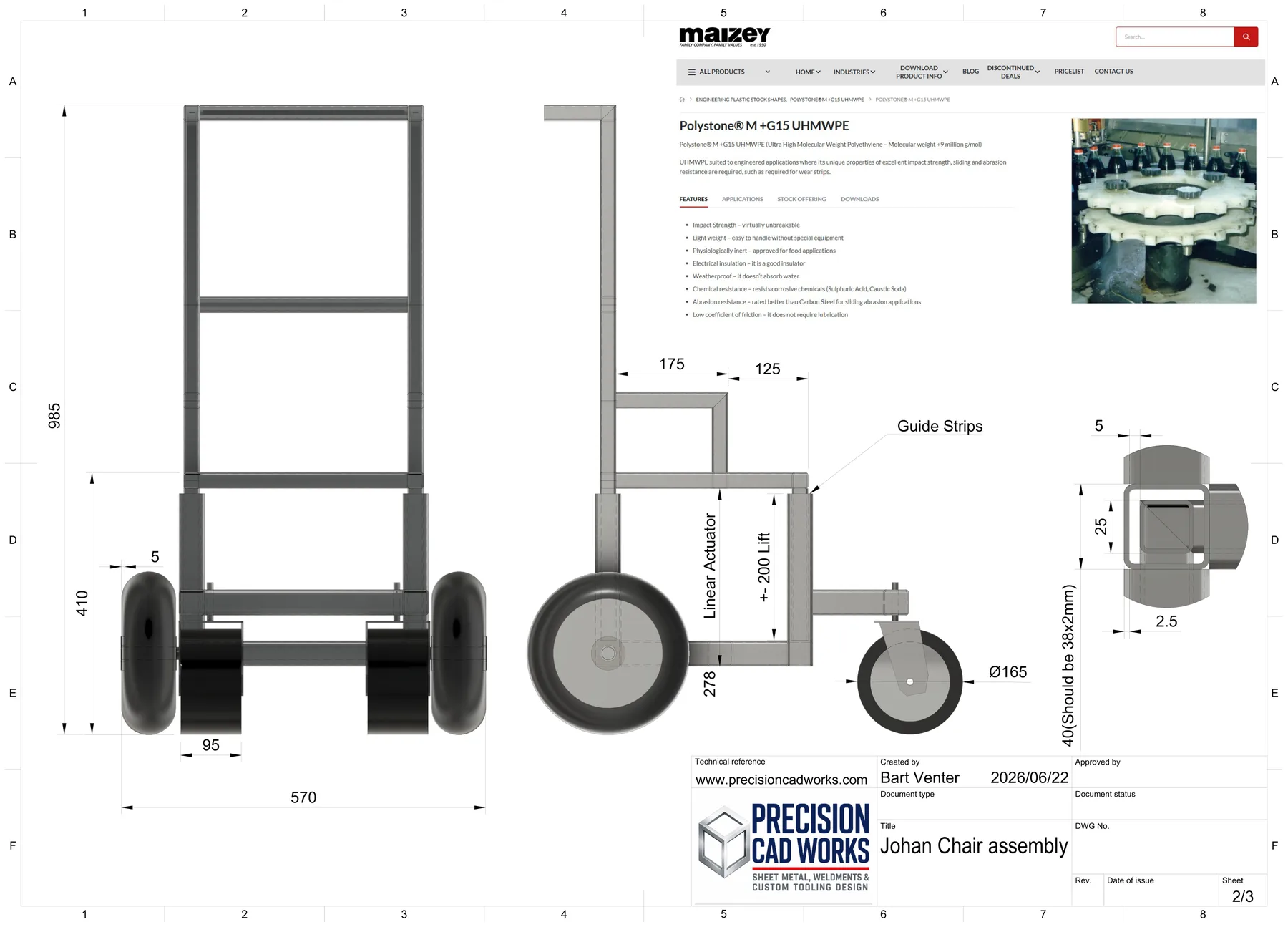
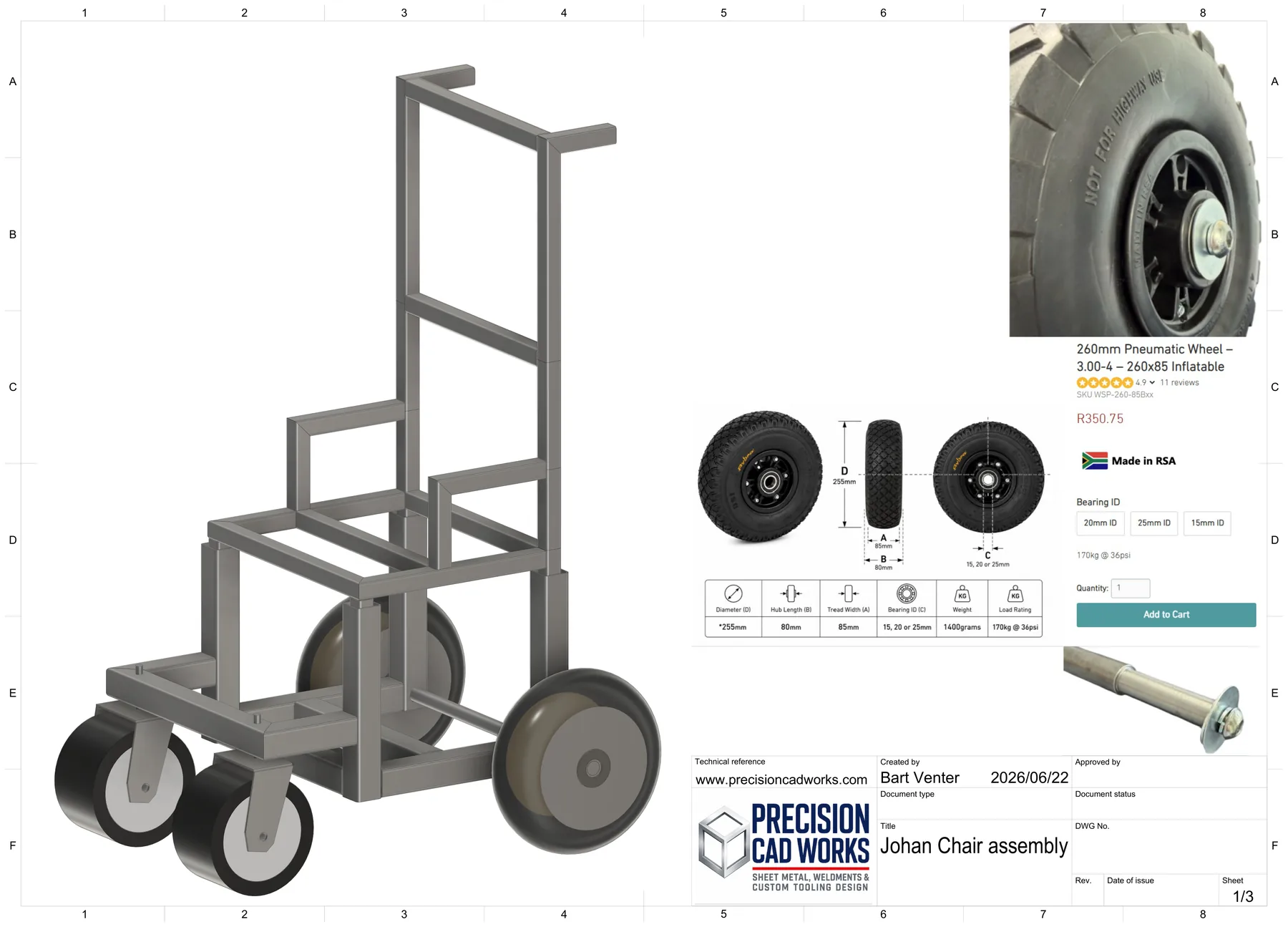
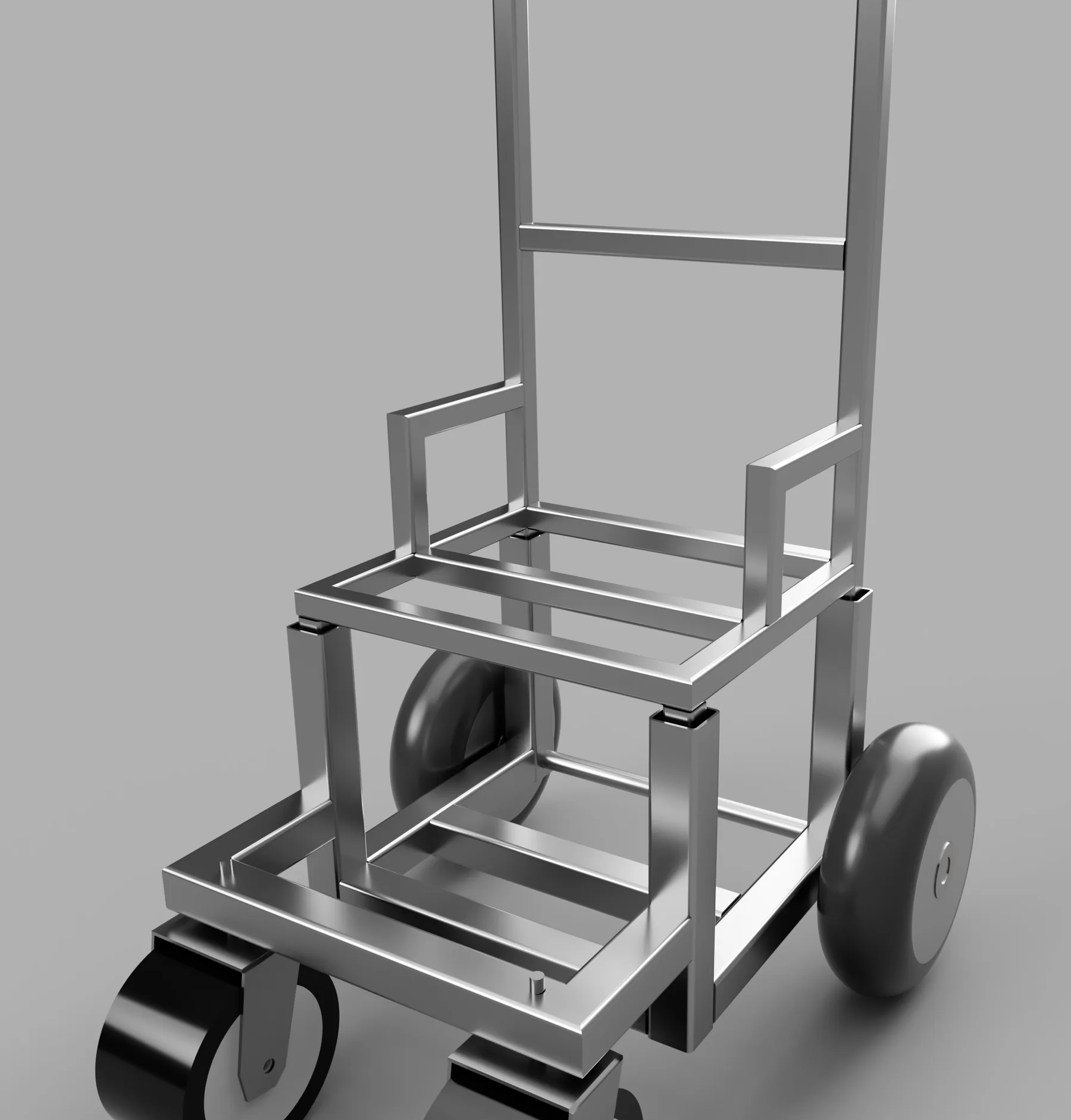
A 38 × 2 mm square-tube frame, 570 mm across the rear wheels, with the actuator driving a carriage between UHMWPE guide strips. Pneumatic rear wheels and Ø165 mm castors let it be used indoors and on paving without changing anything. A 12 V 12 Ah battery keeps it self-contained.
The cushion came first
The seat platform and backrest are dimensioned around the cushion. A frame designed first and a cushion fitted afterwards is how posture support becomes an afterthought.
Mechanism in the centre
Keeping the actuator between the rails rather than beside each one is what holds the width at 570 mm.
Details that mattered
Guide strips
UHMWPE strip on the sliding faces. No lubrication, and a workshop can replace it when it wears.
Actuator
3 000 N on a 200 mm stroke, taken from the standard range with margin over the seat and occupant load. The load travels down the column; the strips take side load.
Wheels
260 mm pneumatic rears rated 170 kg at 36 psi with 15, 20 or 25 mm bearing bores; Ø165 mm castors. 410 mm of clearance under the frame.
What it gives the client
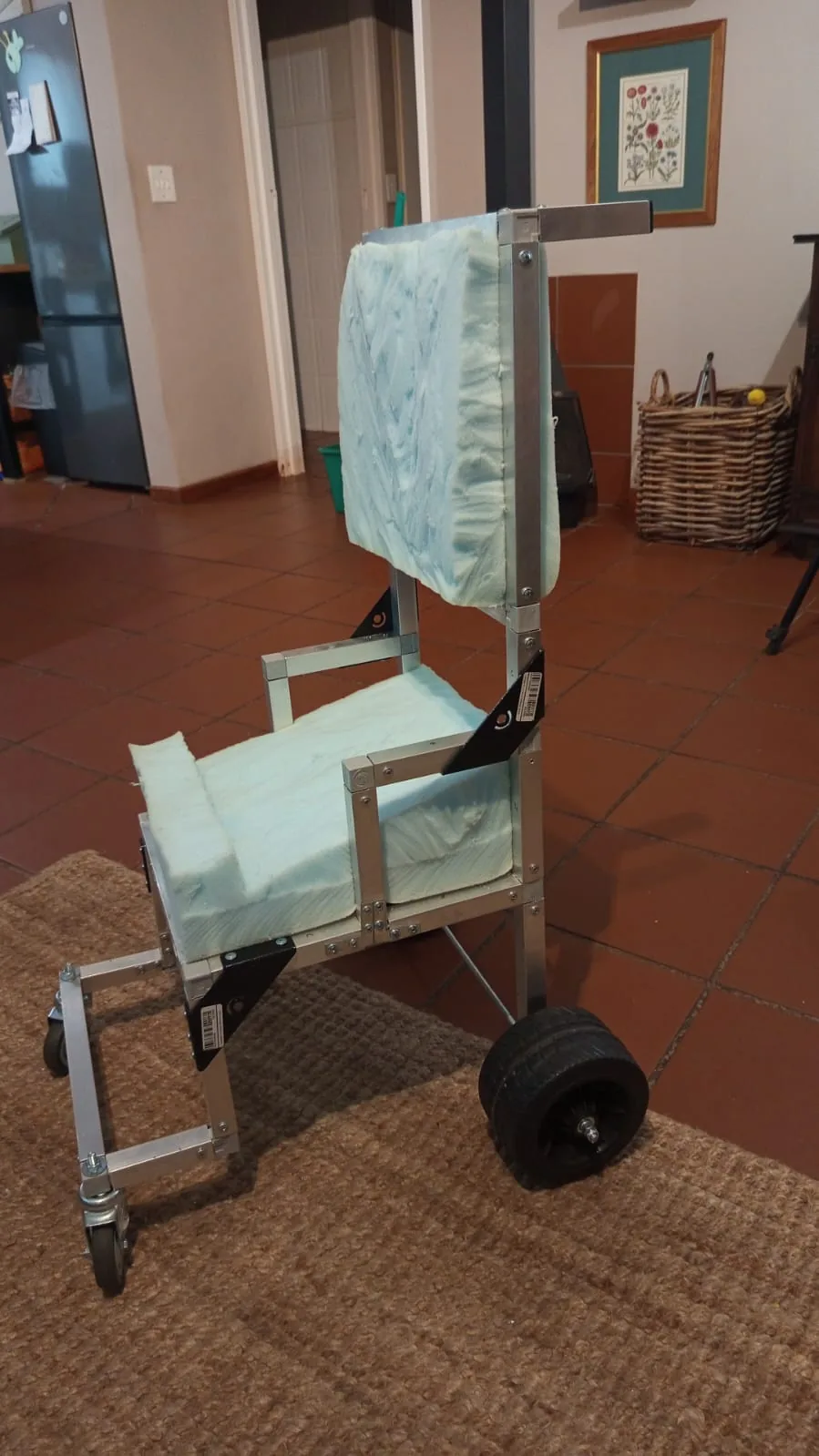
The drawing set takes it to a complete assembly and one chair was built from it. The frame, brackets, wheels and upholstered seat in the client’s photograph match the drawing. Work of this kind suits assistive-technology suppliers and fabricators building adjustable frames in small batches.
Issued as a concept design covering structure, mechanism and component selection. A production version would need structural verification, a risk assessment covering stability, restraint and pinch points, and compliance work for the device class, with the seating assessed by a clinician. The photograph of the chair in use is not published, to protect the child’s privacy.
Drawings
The working drawing, the model it came from, and the chair as built.